
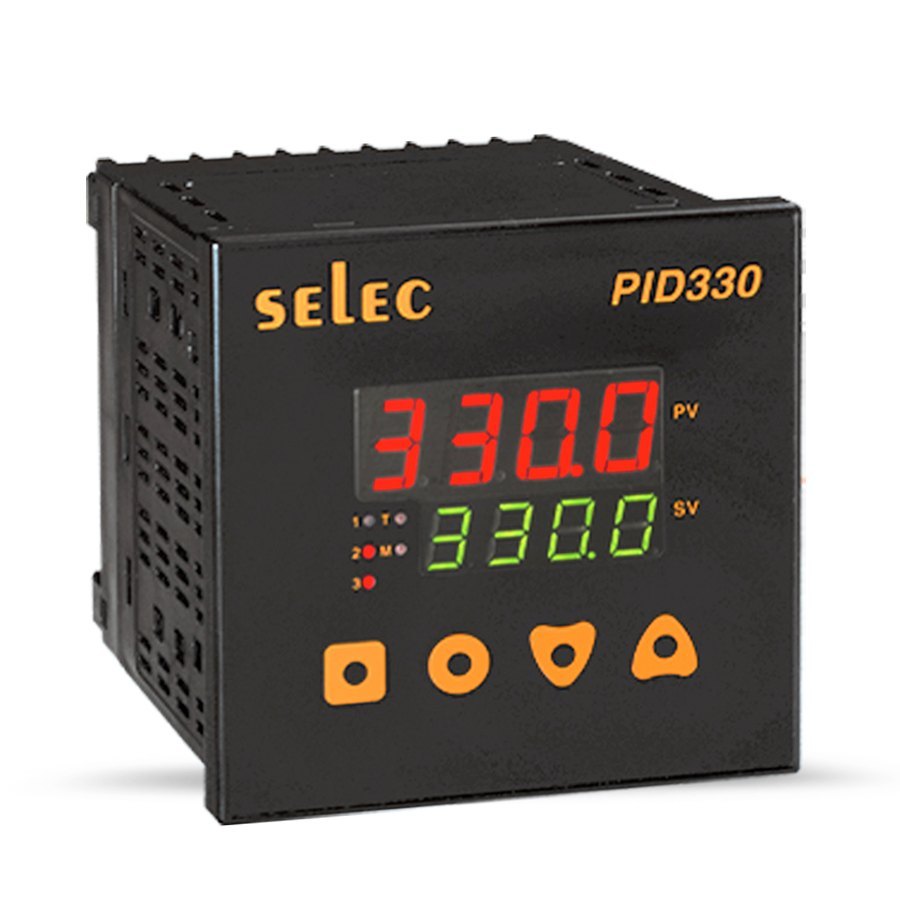
Temperature Controller A temperature controller is a device used to maintain the temperature of a system within a desired range by comparing the measured temperature to a set point and making adjustments accordingly. Temperature controllers are widely used in industrial and laboratory settings to regulate the temperature of equipment, processes, and environments. Types of Temperature Controllers On/Off Controllers: Simplest form of temperature control. The device switches on or off when the temperature deviates from the set point. Suitable for systems where precise temperature control is not critical or where the temperature fluctuation is acceptable. Proportional Controllers: Provide a gradual response to temperature changes. Adjusts power output proportionally based on the difference between the set point and the current temperature. Reduces oscillation around the set point and provides smoother control compared to on/off controllers. Proportional-Integral-Derivative (PID) Controllers: Most sophisticated type of temperature controller. Combines proportional, integral, and derivative control to minimize overshoot and maintain stability. Continuously adjusts the power to maintain precise control over the temperature. Commonly used in applications requiring high accuracy and stability, such as chemical processes, ovens, and incubators. Components of a Temperature Controller Sensor: Measures the current temperature. Common types include thermocouples, Resistance Temperature Detectors (RTDs), and thermistors. Control Unit: Compares the measured temperature to the set point. Decides what action to take (e.g., turn heating or cooling elements on or off). Output Device: Controls a heating or cooling element, such as a relay, Solid State Relay (SSR), or triac.

This is your website preview.
Currently it only shows your basic business info. Start adding relevant business details such as description, images and products or services to gain your customers attention by using Boost 360 android app / iOS App / web portal.
Temperature Controller A temperature controller i...
2024-10-10T04:46:10
Temperature Controller A temperature controller is a device used to maintain the temperature of a system within a desired range by comparing the measured temperature to a set point and making adjustments accordingly. Temperature controllers are widely used in industrial and laboratory settings to regulate the temperature of equipment, processes, and environments. Types of Temperature Controllers On/Off Controllers: Simplest form of temperature control. The device switches on or off when the temperature deviates from the set point. Suitable for systems where precise temperature control is not critical or where the temperature fluctuation is acceptable. Proportional Controllers: Provide a gradual response to temperature changes. Adjusts power output proportionally based on the difference between the set point and the current temperature. Reduces oscillation around the set point and provides smoother control compared to on/off controllers. Proportional-Integral-Derivative (PID) Controllers: Most sophisticated type of temperature controller. Combines proportional, integral, and derivative control to minimize overshoot and maintain stability. Continuously adjusts the power to maintain precise control over the temperature. Commonly used in applications requiring high accuracy and stability, such as chemical processes, ovens, and incubators. Components of a Temperature Controller Sensor: Measures the current temperature. Common types include thermocouples, Resistance Temperature Detectors (RTDs), and thermistors. Control Unit: Compares the measured temperature to the set point. Decides what action to take (e.g., turn heating or cooling elements on or off). Output Device: Controls a heating or cooling element, such as a relay, Solid State Relay (SSR), or triac.
2024-10-10T04:46:10


Keywords
- set point
- Common types
- power output
- Control Unit
- Output Device
- high accuracy
- Simplest form
- desired range
- Off Controllers
- precise control
- cooling elements
- gradual response
- smoother control
- Solid State Relay
- chemical processes
- sophisticated type
- derivative control
- current temperature
- temperature changes
- laboratory settings
- temperature fluctuation
- Temperature controllers
- Proportional Controllers
- precise temperature control
- Resistance Temperature Detectors
- Proportional-Integral-Derivative (PID) Controllers
Submit Your Enquiry